When I Was “Doing Fine” — But My Body Knew I Wasn’t
The Quiet Truth Behind “I’m Fine”
There was a stretch during the pandemic when, from the outside, I looked like I was doing everything right.
I was working.
Showing up for people.
Meeting deadlines.
Keeping life moving forward.
If someone had asked how I was doing, I likely would have said, “I’m okay. Busy, but okay.”
But my body was telling a different story.
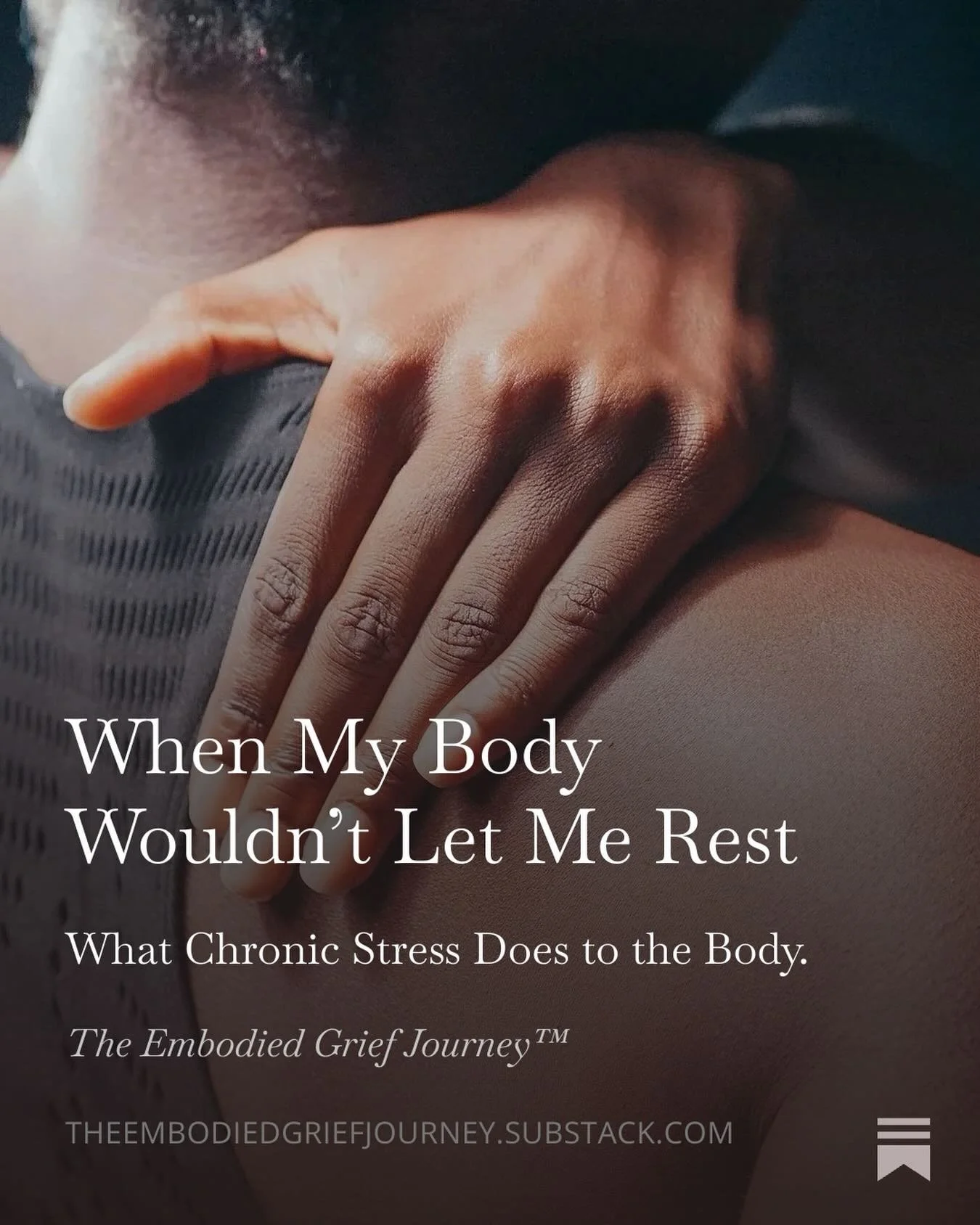
Sleep had become fragile. Some nights I barely slept at all. My nervous system felt constantly on edge — like a humming current running beneath my skin. I developed physical symptoms no one could fully explain. And even though I was still “functioning,” there was a quiet heaviness underneath everything.
Around that same time, I lost my father.
And soon after, my beloved dog Bella.
Grief layered itself over an already exhausted system.
Yet I kept going. Because that’s what so many of us do.
This is the place many people quietly find themselves: high-functioning on the outside, but emotionally depleted on the inside.
You may still be meeting responsibilities. You may still be the reliable one. But internally you might feel numb, burned out, anxious, or disconnected from your own life.
This experience is more common than many of us realize.
And it often has very little to do with weakness — and everything to do with the nervous system trying to survive a long season of stress and loss.

The outside looked fine. My nervous system told another story.
What “Functioning but Miserable” Can Look Like
For a long time, I didn’t realize what was happening to me.
I just assumed I needed to try harder.
Be more organized.
Be more disciplined.
Be more grateful.
But emotional burnout doesn’t always look dramatic. Often it hides inside competence.
You might recognize pieces of this:
• You keep up with work and responsibilities, but feel emotionally exhausted.
• You have high-functioning anxiety — always thinking about the next task or problem to solve.
• You struggle with insomnia or restless sleep, even when you’re physically tired.
• You feel strangely numb or disconnected, even in moments that should feel joyful.
• You’re constantly caring for others, but rarely feel cared for yourself.
• Your body holds tension, headaches, digestive issues, or other stress-related symptoms.
Many people minimize these experiences because they are still “handling life.”
But being capable and being well are not the same thing.
In my work today offering trauma informed grief support and grief coaching online, I meet many people in this exact place — people navigating loss, caregiving, identity shifts, or life transitions who are still doing everything expected of them.
And quietly wondering:
Why do I feel this way when nothing looks wrong on the outside?
If this question resonates, you’re welcome to read more about the support I offer for grief support and somatic grief healing — simply as a place to explore what this kind of support can look like.
When My Nervous System Stayed in “Go Mode”
One of the things I eventually learned is that the nervous system doesn’t turn off stress just because life expects us to keep going.
During that season of my life, my system had absorbed:
• Pandemic uncertainty
• Ongoing work pressure
• Personal grief after losing my father
• The heartbreak of losing Bella
• Years of internal expectations to perform perfectly and please everyone
Even when I tried to rest, my body didn’t know how.
Rest felt… unfamiliar.
Sometimes even unsafe.
This is one of the hidden dynamics behind high-functioning anxiety and emotional burnout.
When the nervous system has lived in chronic stress or trauma activation, it becomes accustomed to staying in motion — what many people describe as “go mode.”
In this state:
• The body releases stress hormones more frequently
• The mind stays hyper-alert for problems to solve
• Productivity becomes a substitute for emotional safety
• Stillness can feel uncomfortable or unsettling
So instead of slowing down, we push harder.
And eventually the body begins speaking in other ways: insomnia, fatigue, illness, emotional numbness, or unexplained physical symptoms.
This is where body based grief healing and nervous system regulation become so important.
Support that includes somatic awareness — not just talking about feelings, but helping the body experience safety again — can gently interrupt these cycles.
If you’re curious about how grief coaching online, zoom grief support groups, or trauma-informed somatic grief healing can help restore nervous system balance, you can learn how this kind of grief support works and why it helps regulate the body during loss and burnout.
What My Body Needed Before It Could Move Forward
For a long time, I believed the solution was better goals.
More structure.
Better productivity habits.
A new plan for the year.
But what my body actually needed was something much simpler.
Slowness.
Space.
Permission to not perform for a little while.
Healing didn’t begin with doing more. It began with learning to listen to the quiet signals inside my body again.
Sometimes that looked like:
• Short walks without an agenda
• Sitting with grief instead of pushing it away
• Breathing exercises that calmed my nervous system
• Gentle movement or yoga to release stored stress
• Naming feelings I had previously suppressed
Over time, something shifted.
My body began trusting stillness again.
From that place, emotional awareness returned.
Boundaries became clearer.
And small moments of joy began reappearing in ordinary life.
This is the heart of somatic grief healing and grief and trauma healing work.
Not fixing people.
But helping the nervous system rediscover safety, self-trust, and connection.
For some people, that support happens through online workshops, grief coaching online, zoom grief support groups, or immersive experiences like a grief healing retreat.
Each person’s path unfolds differently.
A Gentle Reflection
If you are reading this and recognizing yourself in these words — the part of you that keeps going, even while feeling overwhelmed or emotionally tired — please know that nothing about this experience means you are failing.
Often it simply means your body has been carrying too much for too long.
Support doesn’t have to arrive at the point of crisis.
Sometimes it begins quietly — with curiosity, conversation, and space to breathe again.
If it feels supportive, you are always welcome to begin with a quiet conversation about grief coaching or somatic grief support and see what feels right for you.
There is no pressure, no timeline, and no expectation.
Just a place to be human again — and perhaps to remember that functioning isn’t the same thing as truly being well. 🤍

Dawn M. Geoppinger, Trauma-Informed Grief & Embodiment Coach
Dawn M. Geoppinger is a Trauma-Informed Grief & Embodiment Coach based in Portland, Oregon, with a strong foundation of over two decades of professional experience in public administration, education, and the nonprofit sector. She specializes in grief education, somatic movement, breathwork, and mindfulness, integrating evidence-based approaches such as somatic practices, post-traumatic growth and woman-centered principles to help clients reconnect with themselves, regulate their nervous systems, and honor the full spectrum of loss and healing. Through her practice, The Embodied Grief Journey™, Dawn provides compassionate, expert support both in person and online—creating safe, nurturing spaces for individuals to explore grief, resilience, and embodied healing.